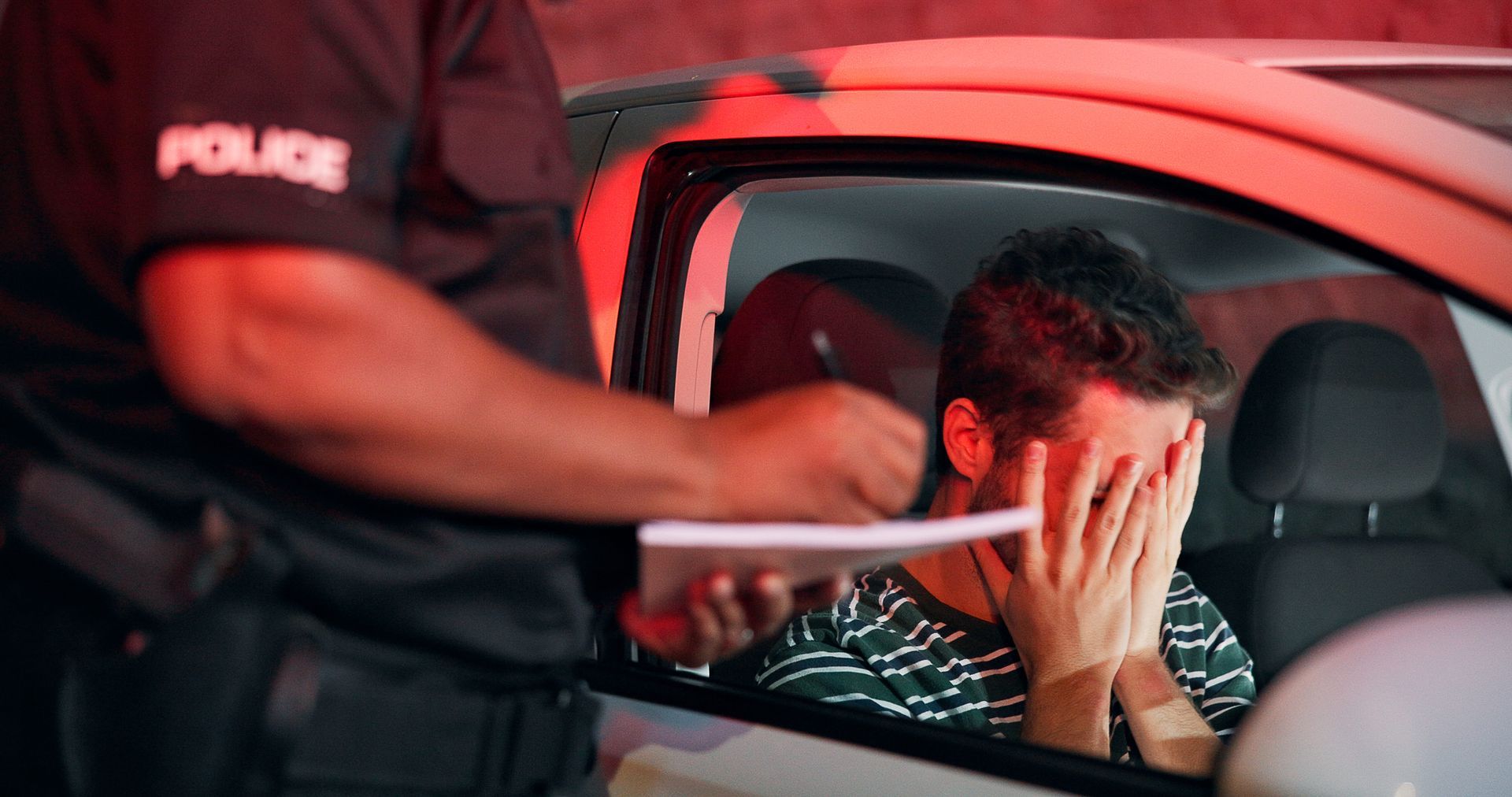

Can Police Search Your Car During a Traffic Stop in Miami?
Can Police Search Your Car During a Traffic Stop in Miami?
Getting pulled over in Miami can already be stressful. That stress can increase quickly when an officer asks, “Do you mind if I search your car?”
Many drivers assume that because police legally stopped their vehicle, officers automatically have the right to search it. That is not necessarily true.
The Fourth Amendment protects against unreasonable searches and seizures, and Florida law likewise recognizes protections against unreasonable searches. However, vehicles are subject to several important exceptions to the usual warrant requirement. Whether a search is lawful can depend on consent, probable cause, an arrest, officer-safety concerns, or other circumstances surrounding the stop.
If drugs, firearms, stolen property, or other evidence is discovered during a vehicle search in Miami or South Florida, the legality of that search can become a critical issue in the resulting criminal case.
Does a Traffic Stop Automatically Give Police the Right to Search Your Car?
No.
An officer's legal justification for pulling you over does not, by itself, give police unlimited authority to search the entire vehicle.
A traffic stop and a vehicle search are separate legal issues. Police generally need an independent legal justification for a warrantless search.
Depending on the circumstances, that justification could include:
- Your voluntary consent
- Probable cause that the vehicle contains evidence or contraband
- A lawful search connected to an arrest
- Certain officer-safety concerns
- An inventory search conducted under applicable rules
- Another recognized exception to the warrant requirement
The specific facts surrounding the stop are important when determining whether a search was lawful.
Can Police Ask for Permission to Search Your Car?
Yes.
Even when officers do not otherwise have grounds to search a vehicle, they can ask the driver for consent.
If you voluntarily agree, police may generally conduct a search within the scope of the consent you provided.
That makes the interaction important. A defense attorney may examine exactly what the officer asked, what the driver said, whether consent was actually given, and whether it was voluntary.
Do You Have to Consent to a Vehicle Search in Florida?
Generally, you do not have to voluntarily agree to a search simply because an officer asks for permission.
You can clearly and calmly state that you do not consent to a search.
Refusing consent does not necessarily prevent police from searching if they have another lawful basis to do so. For example, an officer who develops probable cause may potentially conduct a warrantless vehicle search regardless of whether the driver agrees.
But refusing consent can make an important distinction clear: you did not voluntarily authorize the search.
Do not physically interfere with an officer who decides to proceed. The legality of the search can be challenged later through the appropriate legal process.
When Can Police Search a Car Without a Warrant?
One major exception to the warrant requirement is commonly called the automobile exception.
Florida has specifically incorporated federal constitutional principles concerning warrantless searches of vehicles carrying contraband.
Generally, when police have probable cause to believe a vehicle contains contraband or evidence of a crime, a warrantless search may be permissible.
Probable cause requires more than a random hunch. It depends on the facts and circumstances known to the officer.
The question in a criminal case may therefore become: What did the officer know before the search began, and was it enough to establish probable cause?
How Much of the Vehicle Can Police Search?
The permissible scope of a search depends on the legal justification for it.
When probable cause justifies a vehicle search, officers may generally search areas where the object they have probable cause to look for could reasonably be located.
For example, if officers are lawfully searching for an item small enough to fit inside a container, the permissible search could potentially extend to containers where that item might be found.
A search cannot simply be evaluated by asking whether police were allowed to search something. The defense may also examine whether officers exceeded the lawful scope of that search.
Can Police Search the Trunk?
Potentially.
There is no universal rule that a vehicle's trunk is always protected from a warrantless search.
Whether officers can search it depends on the justification and scope of the particular search. Probable cause broad enough to cover areas where the suspected evidence could be located may potentially extend to the trunk.
Consent can also matter. What exactly the driver agreed to—and whether any limits were placed on that consent—can become relevant.
What if Police See Something Illegal in Plain View?
Objects that officers lawfully observe from a place where they have a right to be can sometimes provide grounds for further action.
For example, an officer who lawfully approaches a vehicle and observes apparent contraband may potentially develop probable cause based on that observation and the surrounding circumstances.
But the details matter.
Questions may include:
- Where was the officer standing?
- Could the item actually be seen from outside the vehicle?
- What did the officer believe the item was?
- Was the incriminating nature of the item immediately apparent?
- Did officers manipulate or move something before seeing it?
Body-camera footage and other recordings can become particularly important when the officer's account of what was visible is disputed.
Can Police Search Your Car After Arresting You?
An arrest does not automatically give officers unlimited authority to search every part of a vehicle.
Florida law allows an officer making a lawful arrest to search the arrested person and the area within that person's immediate presence for purposes that include officer protection and discovering fruits of a crime.
Federal constitutional law also limits vehicle searches incident to arrest. The circumstances of the arrest, the person's ability to access the passenger compartment, and whether evidence related to the offense of arrest may be inside the vehicle can all matter.
Therefore, “I was arrested, so police could search my entire car” is too broad a conclusion.
Can Police Search Your Car for Weapons?
Officer-safety concerns can sometimes justify a limited protective search.
Florida's Stop and Frisk Law permits a protective search when the statutory requirements are met, including probable cause to believe a temporarily detained person is armed with a dangerous weapon and poses a safety threat. The statute limits such a search to what is necessary to discover the weapon.
A protective search for weapons is different from an unrestricted evidence search.
If police claim a search was necessary for officer safety, the specific circumstances supporting that claim should be examined.
Can Police Use a K-9 During a Miami Traffic Stop?
A police dog can sometimes be used during a lawful traffic stop, but timing is important.
In Rodriguez v. United States, the U.S. Supreme Court held that police generally cannot extend an otherwise completed traffic stop simply to conduct a dog sniff unless there is independent reasonable suspicion supporting the additional detention.
In practical terms, police cannot ordinarily turn a completed traffic stop into a longer detention solely because they want additional time for a K-9 investigation.
If officers prolong the stop, a defense attorney may examine:
- How long the stop lasted
- What tasks related to the traffic violation were being performed
- When those tasks were completed
- When the K-9 arrived
- Whether officers had developed independent reasonable suspicion
- What facts allegedly supported that suspicion
Dash-camera and body-camera timestamps can be valuable in reconstructing the timeline.
Can Police Make You Wait for a K-9 Unit?
Not indefinitely.
The Supreme Court's decision in Rodriguez makes clear that authority for a traffic stop is tied to the purpose of that stop. Extending it for an unrelated dog sniff requires additional legal justification.
If the original reason for the stop has been addressed and police keep a driver detained solely while waiting for a K-9, whether officers possessed independent reasonable suspicion can become a significant constitutional issue.
What if Drugs Are Found During the Search?
When drugs are discovered in a vehicle, the resulting case may involve more than one legal question.
First, was the search lawful?
Second, can prosecutors actually connect the drugs to the person charged?
This can become especially important when multiple people were inside the vehicle. The fact that drugs were found somewhere in a car does not automatically answer who knew about them or who exercised control over them.
Potential issues may include:
- Where the drugs were located
- Who owned or controlled the vehicle
- Whether the drugs were visible
- Who had access to the location
- Whether multiple passengers were present
- Statements made by the occupants
- Fingerprints or other physical evidence
- Whether prosecutors can establish knowing possession
The legality of the search and the ability to prove possession can therefore become separate defense issues.
What if a Gun Is Found in the Car?
A firearm discovered during a traffic stop can raise similarly complicated questions.
Possession of a firearm is not automatically illegal simply because a gun is inside a vehicle. The circumstances matter, including the person's legal status, where and how the firearm was kept, and whether other firearm laws apply.
If police allege unlawful firearm possession, additional questions may include:
- Was the vehicle search legal?
- Who owned the firearm?
- Did the defendant know the firearm was there?
- Where was it located?
- Who could access it?
- Were multiple occupants in the vehicle?
- Was the person legally prohibited from possessing a firearm?
These details can be particularly important in cases involving shared or borrowed vehicles.
Can Police Search Your Phone During a Traffic Stop?
A traffic stop does not ordinarily give police unrestricted access to the contents of your phone.
Florida's distracted-driving statute contains particularly clear protections in the context of stops for prohibited wireless-device use. It requires officers making such a stop to inform the driver of the right to decline a phone search and generally prohibits accessing the device without a warrant. Any consent obtained must be voluntary and unequivocal.
Phones can contain enormous amounts of private information, and different constitutional rules may apply to accessing their digital contents than to searching physical areas of a vehicle.
What Should You Do if an Officer Asks to Search Your Car?
If an officer asks for permission, you can remain calm and clearly state:
“I do not consent to a search.”
You do not need to argue with the officer or explain why.
If police search anyway, do not physically resist or interfere. Instead, remember as much as you can about the encounter.
Details that may later matter include:
- Why the officer said you were stopped
- When the officer asked to search
- Whether you were told you could leave
- Whether consent was requested
- Your response
- How long you were detained
- Whether a K-9 was involved
- What areas officers searched
- What officers found
- Statements made before and after the search
Your attorney can later evaluate whether the search complied with constitutional requirements.
What Happens if the Vehicle Search Was Illegal?
When evidence is obtained through an unconstitutional search or seizure, the defense may seek to prevent prosecutors from using that evidence.
Florida's Stop and Frisk Law, for example, expressly provides that evidence seized through a search under that statute is not admissible unless the search was authorized and conducted in compliance with its requirements.
More broadly, constitutional violations can be raised through a motion to suppress.
Suppose the central evidence in a drug case is narcotics discovered during a vehicle search. If the court determines that the search violated the defendant's constitutional rights and suppresses those drugs, the prosecution may lose critical evidence.
Suppression does not automatically guarantee dismissal in every case, but it can substantially affect whether and how prosecutors are able to proceed.
What Evidence Can Help Determine Whether the Search Was Legal?
Vehicle-search cases often depend heavily on the exact sequence of events.
Useful evidence may include:
- Officer body-camera footage
- Patrol-car dash-camera footage
- Dispatch records
- K-9 deployment records
- Traffic citations
- Police reports
- 911 calls
- Nearby surveillance footage
- Passenger or witness statements
- Photographs
- Search warrants and affidavits, if applicable
Comparing these records can help determine whether the officer's stated justification matches what actually happened during the stop.
Why Does the Initial Traffic Stop Matter?
Before examining the search, a defense attorney may also examine whether the traffic stop itself was lawful.
Florida law authorizes law enforcement to enforce traffic laws and, in applicable circumstances, require drivers to exhibit their licenses and registration documents.
But police still need lawful grounds for a traffic detention.
If the defense challenges the basis for the original stop, that issue may affect evidence discovered afterward.
That is why a vehicle-search case should often be examined from the very beginning—not merely from the moment officers opened a door or searched the trunk.
Facing Charges After a Vehicle Search in Miami?
A traffic stop can quickly turn into a criminal investigation when police discover alleged drugs, firearms, stolen property, or other evidence inside a vehicle.
But the discovery of evidence does not end the legal analysis.
Questions about why the vehicle was stopped, why the search began, whether consent was given, whether probable cause existed, how long the stop lasted, and whether officers exceeded the permissible scope of the search can all matter.
MPM Law represents clients facing criminal charges in Miami, Miami-Dade County, and throughout South Florida, including drug crimes, firearm and weapon offenses, DUI cases, and other misdemeanor and felony allegations.
If criminal charges resulted from a vehicle search, attorney Matthew Meyers can review the traffic stop, police conduct, and evidence to determine what legal issues may be available as part of your defense.